Chilled Yu-Pack requires you to cool the parcel before handing it over. Do not bring a warm item expecting the postal service to perform that preparation: Japan Post says an item that has not been pre-cooled may be refused. Also check the required temperature of the contents against the service conditions, rather than relying on the word “chilled.” Japan Post: Chilled Yu-Pack precautions.

Check the dated temperature notice, not an old range
Japan Post announced that Chilled Yu-Pack’s storage temperature range would change from 0–5°C to 0–10°C from 1 February 2026. The notice concerns the service’s storage range; it is not a promise that the centre of every item remains at one exact temperature. Japan Post: temperature-change notice, 14 October 2025.
For a hypothetical item whose supplier specifies storage no warmer than 5°C, a service range extending to 10°C does not, by itself, satisfy that requirement. That is a comparison of two conditions, not a finding that the item would necessarily spoil or that every parcel reaches 10°C. Resolve the mismatch with the supplier and carrier before choosing the service.
Likewise, a requirement to remain frozen cannot be inferred to be met by a refrigerated storage range above freezing. This article does not assess food safety, shelf life, or the suitability of particular contents.
Pre-cooling and transport are separate decisions
Think of the job in three stages:
- Before packing: establish the contents’ own storage and shipping instructions.
- Before handover: complete the necessary preparation, including pre-cooling, using those instructions.
- For the postal journey: check the carrier’s temperature conditions and delivery timing against the prepared item.
Buying chilled transport does not replace stage two. Conversely, pre-cooling does not prove that stage three is appropriate for every temperature-sensitive item. Japan Post also notes that parcels may briefly be exposed to outside air during delivery and similar handling. Japan Post: service precautions.
No universal number of refrigerator hours is supplied here. The official postal guidance does not establish one preparation time for every package, container and contents combination. Do not invent that missing number from the temperature range.
Measure the finished chilled package
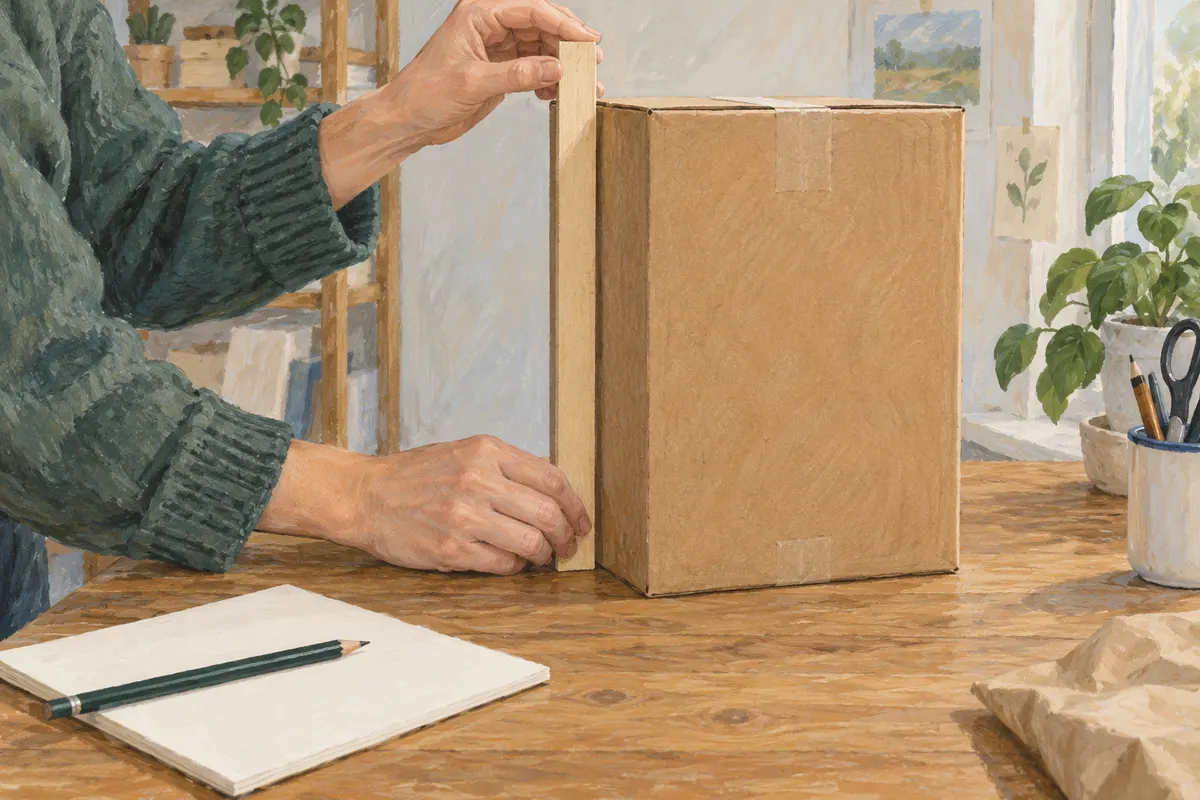
Chilled Yu-Pack has its own acceptance limits: the three dimensions together must be no more than 150cm, the length no more than 100cm, and the weight no more than 25kg. An item that cannot be laid on its side must also be no more than 50cm high. Japan Post: size and weight conditions.
For a hypothetical box measuring 60 × 45 × 40cm, the total is 145cm. It is within the combined-dimension limit. A similar box measuring 70 × 45 × 40cm totals 155cm, which exceeds it. Neither result establishes acceptance on its own: weight, orientation and the contents still matter.
For another example, an upright-only package measuring 55cm high, 40cm wide and 35cm deep totals just 130cm. It nevertheless exceeds the 50cm height condition for a package that cannot be laid on its side. Checking only the three-side total would miss that exception.
Use the outer dimensions after all necessary packaging is in place. The calculation is a planning example, not a recommendation for a specific packing material or a tested packing method.
Choose the counter before making the trip
Japan Post directs senders to a post office that handles Chilled Yu-Pack. Its service page explains how to use the branch-search filter for this service. Check the actual branch and its relevant opening hours before preparing a time-sensitive journey. Japan Post: available posting locations.
Prepare a short note containing the contents’ required range, the packed dimensions, weight and intended destination. That makes it easier to resolve the remaining acceptance and timing questions at the appropriate counter. It does not replace the issuer’s or carrier’s instructions.
This is desk research, not a shipping trial or a temperature test. The central decision is whether the contents’ requirements fit the documented service and preparation conditions. A chilled label alone cannot answer that question.
Related guides
- Which Yu-Pack services convenience stores accept helps distinguish posting locations.
- How to measure an ordinary Yu-Pack parcel explains measurement; do not apply its ordinary-service maximum size to Chilled Yu-Pack.