A lithium power bank is not eligible for Japan Post international mail simply because it is small or new. Japan Post lists power banks among nonmailable items. Its exception concerns qualifying lithium batteries installed in equipment; it is not general permission to mail anything containing a battery. Japan Post: nonmailable international items
This is an initial sorting guide based on official documents, not a test shipment or approval of a particular device.
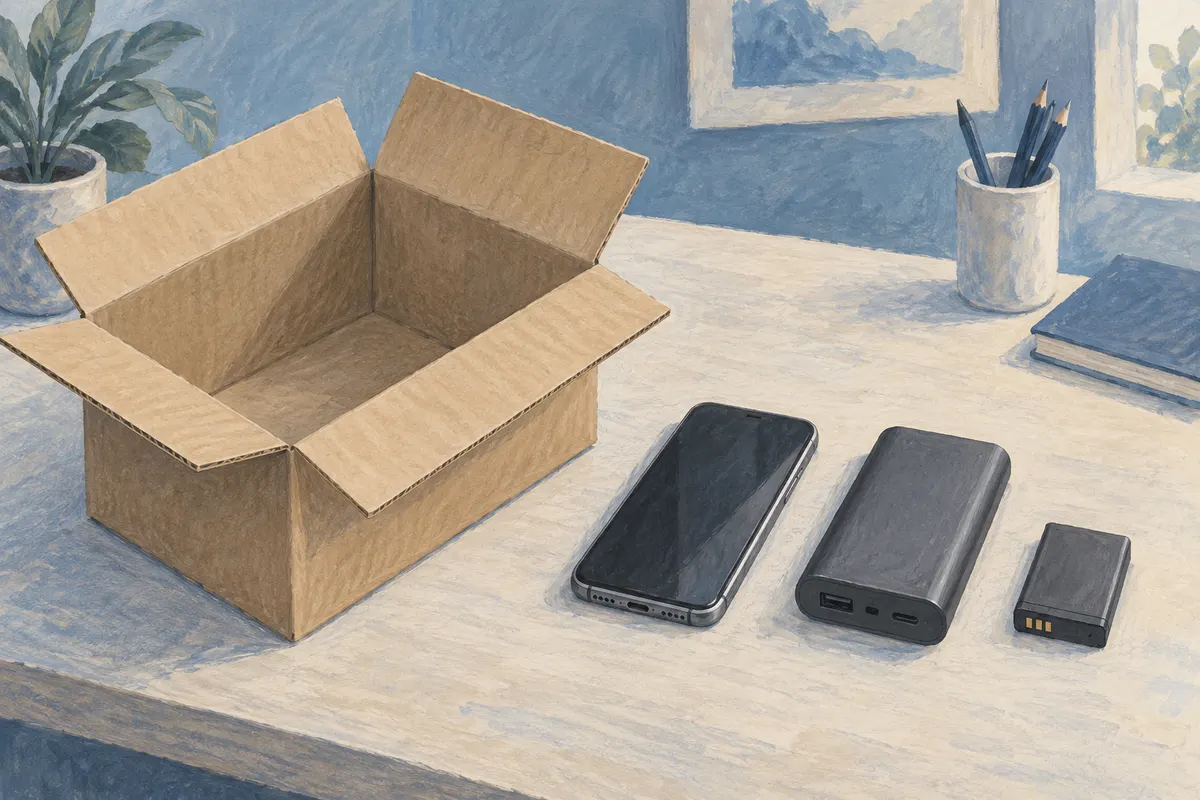
“In the same box” is not “installed”
Japan Post’s lithium-battery conditions distinguish installation from packing together. A loose battery cannot be sent under this exception, even alongside the equipment it powers. Installed batteries must also meet capacity, quantity, protection and destination conditions. Japan Post: lithium-battery conditions, pages 1–2
Use the following fictional gift box to make that distinction before preparing a label:
| Item in the proposed box | Initial decision |
|---|---|
| Phone with its battery installed | Needs the remaining eligibility checks |
| Spare lithium battery beside the phone | Not covered by the installed-battery exception |
| Power bank offered as an extra gift | Remove from the proposed international mailing |
The table is a preparation exercise, not a declaration that the phone qualifies. “One acceptable-looking device” does not make the whole box acceptable when extra contents have different rules.
Size and a charge reading do not settle eligibility
The official conditions include capacity limits and a maximum per mail item of four cells or two assembled batteries. They also exclude damaged or safety-defective batteries and specify protective packing. The document treats installed button-type lithium batteries separately. Do not count products or apply one capacity rule without identifying the battery category. Japan Post: detailed battery criteria
Prepare a short information sheet with the device model, battery model if available, battery specification, number of devices, destination and intended service. Mark missing information as unknown. An empty specification field is a reason to investigate, not a reason to copy a plausible figure from a different product.
For example, a listing that says only “long battery life” gives you a marketing description, not the details needed to classify the battery. Keep the manufacturer’s actual specification available when discussing acceptance at the counter.
Surface mail is not a workaround for a prohibited power bank
Japan Post says its dangerous-goods prohibition applies regardless of transport mode, including sea mail. Choosing a slower route therefore does not turn a prohibited power bank into an eligible item. Japan Post: dangerous goods and transport modes
For equipment that may qualify, check both the destination’s conditions and whether the intended postal service is currently operating. The battery document’s country table is dated August 22, 2025; it should not be treated as today’s route-availability report. Use the current Japan Post service-availability page as a separate check.
Decide what to send before completing the declaration
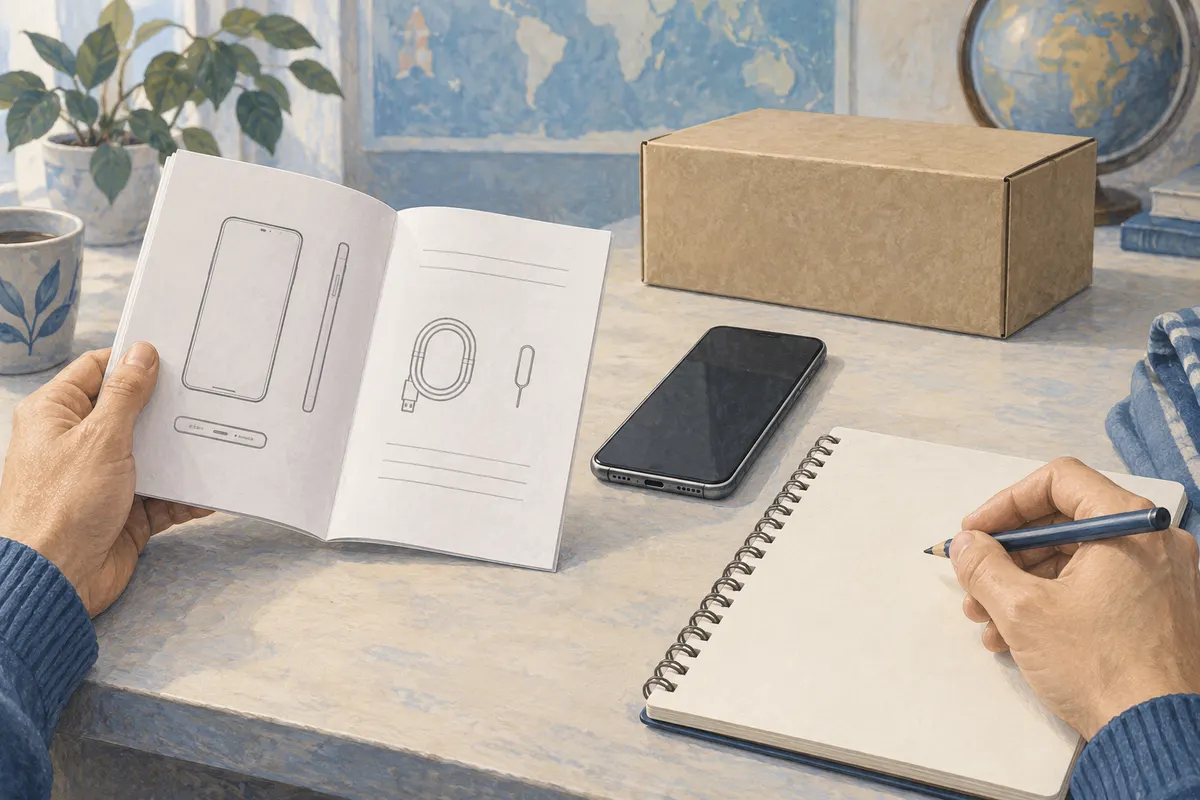
First remove ineligible extras from the proposed contents. Then resolve the remaining device’s specifications and destination conditions. Finally, prepare a declaration describing the contents you will actually send.
If you remove a spare battery after making your contents list, revise the list too. Do not conceal it under a broad description such as “accessories.” This guide has not verified any individual manufacturer’s battery certification, destination’s import permission or parcel’s packaging. Where those details remain unknown, leave the shipment unsubmitted until the required checks are complete.