“RETURN” tells you that an item was sent back; it does not, by itself, explain why. Japan Post lists English and French return markings, including unknown address, unknown forwarding address, refusal and failure to collect within the holding period. Read the reason before correcting the address or preparing another mailing. Japan Post: returned international mail markings
This guide concerns an international item already returned to its sender in Japan. It is desk research, not a tracked shipment investigation. A request to intercept mail that is still travelling is a different procedure.

Match the marking to the question you need to resolve
The first two columns below follow Japan Post’s return-marking list. The last column is an editorial next-step suggestion, not a postal ruling on your item. Japan Post: marking definitions
| Marking | Meaning | Useful next question |
|---|---|---|
| RETURN / RETOUR | Returned | Is there a separate reason elsewhere? |
| UNKNOWN / INCONNU | Addressee/address could not be located | Does the complete recipient/address block match the intended destination? |
| MOVED / DÉMÉNAGÉ | New address unknown | Can the recipient supply their current address? |
| REFUSED / REFUSÉ | Delivery refused | Does the recipient still want the item? |
| UNCLAIMED / NON RÉCLAMÉ | Not collected within the allotted time | Can the recipient collect a new mailing when it arrives? |
Do not treat UNCLAIMED as proof that the address was misspelled, or REFUSED as a request to try again immediately. The label records a postal outcome; it does not explain every event or the recipient’s personal reasons.
Two hypothetical returns need different changes
Suppose a letter comes back marked MOVED. Printing the same address more clearly does not resolve the recorded problem. A useful next step is to obtain a current address from the intended recipient and compare it with the full original block, including apartment or unit details.
Now suppose a parcel returns marked UNCLAIMED. The first question is whether the recipient will be available for another delivery and any necessary collection. Changing the street number without evidence could introduce a new error while leaving the original difficulty unresolved.
These are invented scenarios to show how the same “returned” status can lead to different decisions. They are not findings about a specific delivery attempt, holding period or foreign postal operator.
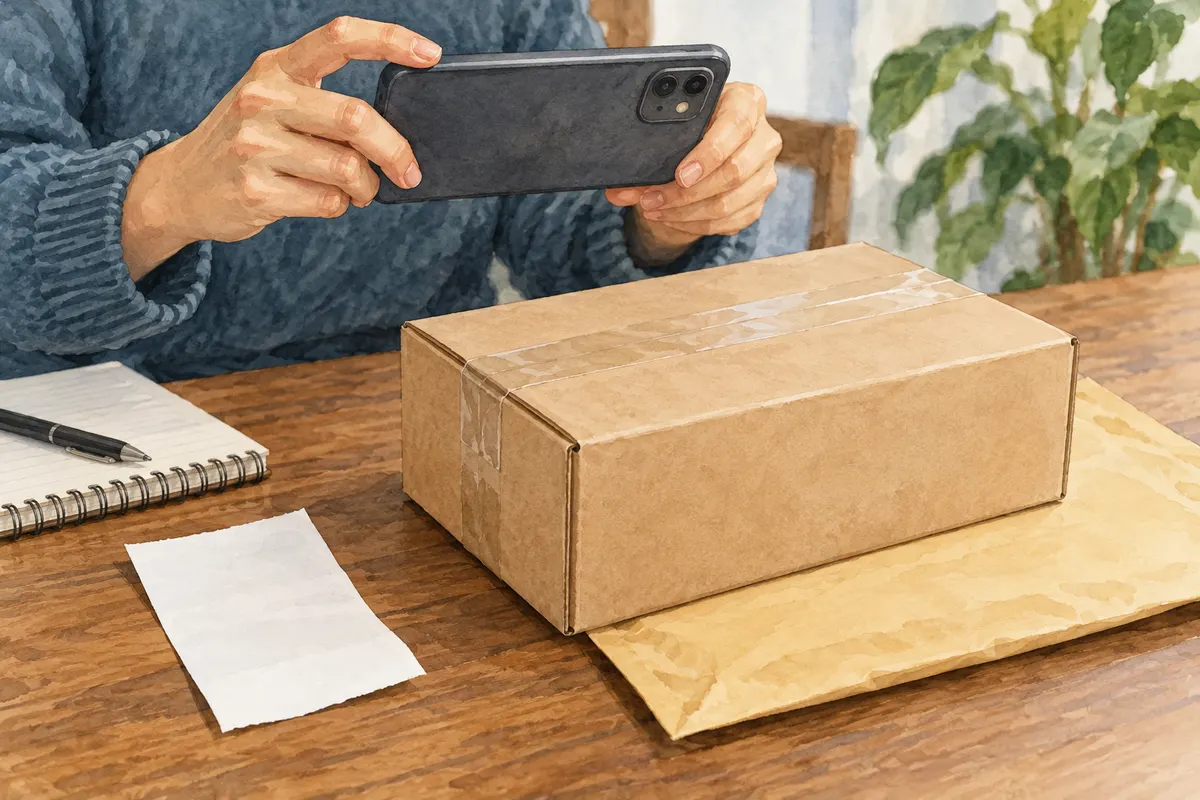
Keep the original packaging while you investigate
Before covering a label or moving the contents, photograph the address block, return markings and any attached notice. Retain the receipt and tracking reference if you have them. Keeping these together is an editorial preparation suggestion: it makes it easier to explain what you sent and what came back.
Write down three things separately: the service used, the exact reason shown, and what the recipient has confirmed. If there are conflicting or illegible markings, take the complete returned item to the postal counter rather than choosing the most convenient interpretation.
No reason shown? Ask about the specific refund condition
Japan Post’s Japanese FAQ says it refunds the postage paid when registered, insured or parcel mail is returned without a stated reason. This is a defined condition, not a general promise that every unsuccessful international mailing is refunded. The Japanese service term for parcel mail is 小包; do not automatically extend it to every item casually called a “small packet.” Japan Post: Japanese FAQ and refund condition
If that may describe your return, show the original item and proof of the service used and ask whether the condition applies. The cited FAQ does not establish a complete application procedure or settle every charge and exception. It also does not say you may reuse cancelled postage for a second attempt.
Before posting again, resolve the reason that caused the return, then obtain the correct fresh sending instructions for the service and destination. Paying for another mailing without resolving the original issue can simply repeat the same problem.